Ivan Was the Researcher Who Originally Described Classical Conditioning.
In the first week the snow came after two days and then it melted after a day. Pavlov was a physiologist not a psychologist.

Ivan Pavlov Psychologist Famed For His Experiments On Dogs New Scientist
In 1896 Austrian physiologist Alois Kreidl demonstrated experimentally that.

. Ivan Pavlov Russian physiologist who first described classical conditioning in 1899 doing research about dogs digestive systems o interest. Asked Feb 27 2016 in Psychology by Camilla. Basic Principles of Classical Conditioning Classical conditioning is a form of learning whereby a conditioned stimulus CS becomes associated with an unrelated unconditioned stimulus US in order to produce a behavioral response known as a conditioned.
After an association is formed the new stimulus will start to produce the same response. Classical conditioning theory can. Marcias reawakened feelings are an example of _____ in classical conditioning.
Pavlov came to his conclusions about how learning occurs completely by accident. It works by associating one stimulus with something else that already leads to a response. View Notes - Russian physiologist Ivan Pavlov was the first to describe classical conditioning from PSY 101 at Arizona State University.
First the dogs were presented with the food they salivated. Pavlovs studies have helped us understand associative learning through classical conditioning. At the time he began writing on the conditioned reflex Pavlov was over fifty years old having spent the earlier part of his life investigating the circulatory system and.
She did it by playing the CD right before filling the dogs bowl with food doing so for three days. Classical Classical conditioning was first observed by researcher Ivan Pavlov in an experiment on digestion gone wrong. Associative Ivan blank was the researcher who originally described classical conditioning.
Physiologists study the life processes of organisms from the. Amy used classical conditioning to train her dog to salivate. Ivan Petrovich Pavlov September 14 1849 - February 27 1936 was a Nobel Prize-winning physiologist best known for his classical conditioning experiments with dogs.
Ivan ___ is the researcher who originally described classical conditioning. The most famous example of classical conditioning was Ivan Pavlovs experiment with dogs who salivated in response to a bell tonePavlov showed that when a bell was sounded each time the dog was fed the dog learned to associate the sound with the presentation of the food. The form of associative learning in which a neutral stimulus is associated with a stimulus to which the subject has an automatic inborn reponse.
Pavlov is known for his studies in classical conditioning which have been influential in understanding learning. Role of salivary secretions in digestion of food o Nobel prize in 1904 an apparatus was made to measure amount of saliva produced when a dog ate o salivation is an involuntary reflex response o dogs salivated at sight of food but also at. People built a psychological learning theory from his small accidental discovery.
Classical conditioning is best described as. Although Edwin Twitmyer published findings pertaining to classical conditioning one year earlier the best-known and most thorough work on classical conditioning is accredited to Ivan Pavlov a Russian physiologist born in the mid-1800s. The process was first described by a Russian physiologist named Ivan Pavlov.
Classical Conditioning First described by Ivan Pavlov a Russian physiologist Focuses on involuntary automatic behaviors Involves placing a neutral signal before a reflex Operant Conditioning First described by B. This is called classical conditioning theory developed by Ivan Pavlov a Russian physiologist. Classical Conditioning Ivan Petrovich Pavlov 1928 Thorndikes psychological research on learning was contemporary with the physiological studies of the nervous system made by Ivan Petrovich Pavlov.
One of his most well-known experiments is where he trained dogs to salivate each time they heard a metronome. Ivan blank was the researcher who originally described classical conditioning. In his research he discovered the conditioned reflex which.
I describe the loss of the phenomenon of classical conditioning later rediscovered by Ivan Pavlov. The name of the researcher who originally described classical conditioning was. Skinner an American psychologist Involves applying reinforcement or punishment after a behavior Focuses on strengthening or weakening.
Classical conditioning is the process in which an automatic conditioned response is paired with specific stimuli. Pavlov showed that dogs could be conditioned to salivate at the sound of a bell if that sound was repeatedly presented at the same time that they were given food. Ivan Pavlov s experiments with dogs are very well-known in the history of psychology.
In the second week she. Classical conditioning consists of associating an initially neutral stimulus with a meaningful. In trying to measure the salivation of dogs he realized that many of the dogs began salivating before the food was even presented.
Classical conditioning was accidentally discovered by Russian physiologist Ivan Pavlov while he was studying digestion. Association is between two stimuli. Classical conditioning is learning through association and was first demonstrated by Ivan Pavlov.
Programmed and Unconditioned Stimulating elements and. Classical conditioning is a type of associative learning that takes place unconsciously. Ivan Pavlovs research on the digestive system of dogs unexpectedly led to his discovery of the learning process now known as classical conditioning.
Ivan Pavlov purposefully set out to study learning in dogs when he discovered what is now called classical conditioning. The form of blank learning in which a neutral stimulus becomes associated with a stimulus to which the subject has an automatic inborn response is called classical conditioning. The form of blank learning in which a neutral stimulus becomes associated with a stimulus to which the subject has an automatic inborn response is called classical conditioning.
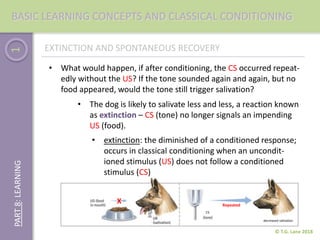
Part 8 Learning

Ivan Pavlov S Beard Classical Conditioning Jokes Etsy In 2022 Psychology Gifts Gifts In A Mug Student Behavior
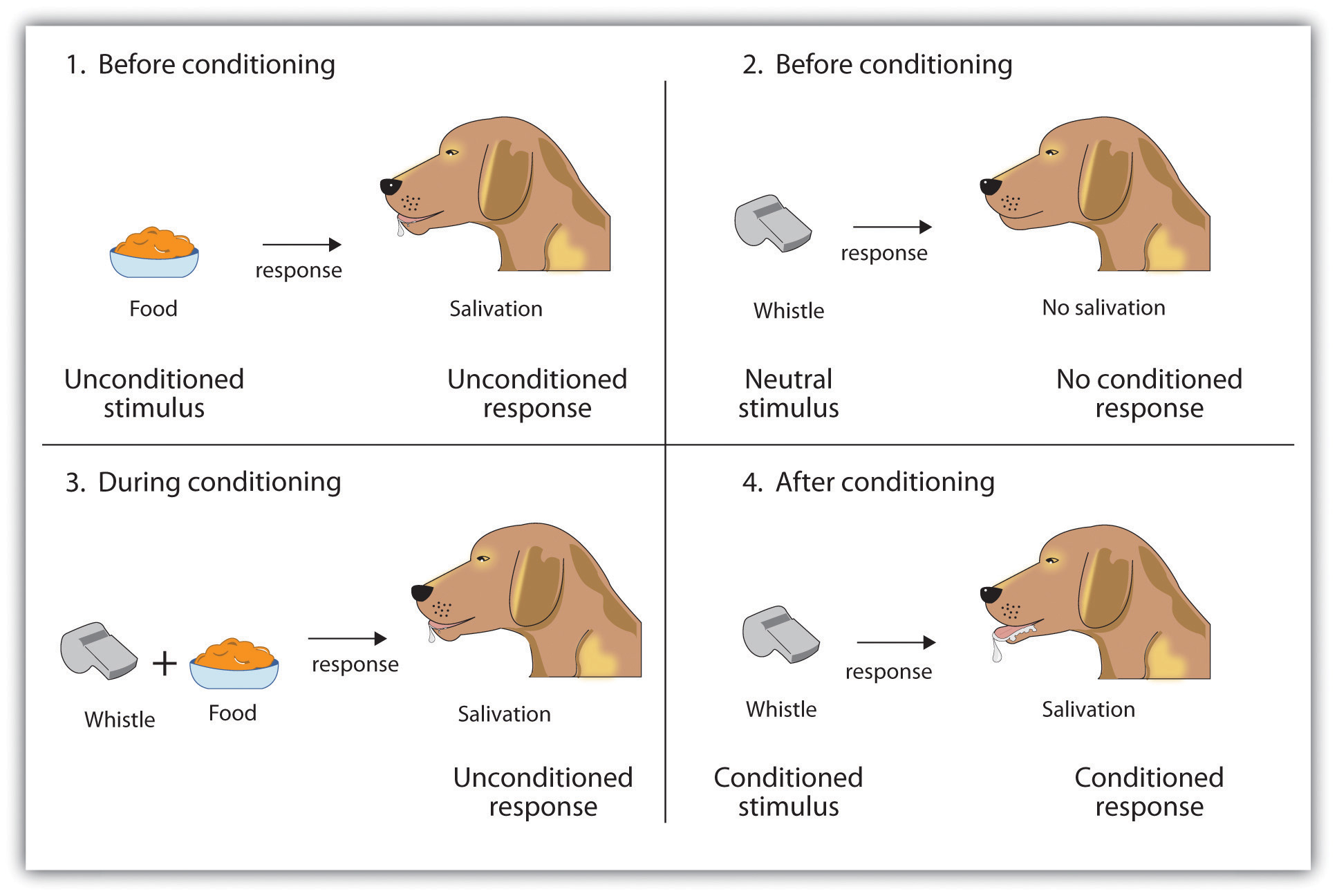
8 1 Learning By Association Classical Conditioning Introduction To Psychology 1st Canadian Edition


Comments
Post a Comment